
Black Preservation Stories
Amplifying voices in Black grassroots heritage preservation
About
Black Preservation Stories explores the inspiring stories of Black individuals, groups, and communities dedicated to preserving and celebrating their heritage. From saving historic buildings and neighborhoods to developing museums and restoring sacred sites, each episode highlights grassroots efforts that keep Black history alive for future generations. Join us as we delve into the roots of Black cultural resilience, uncovering the passion, challenges, and triumphs of those who fight to honor the past and shape a vibrant future.
-
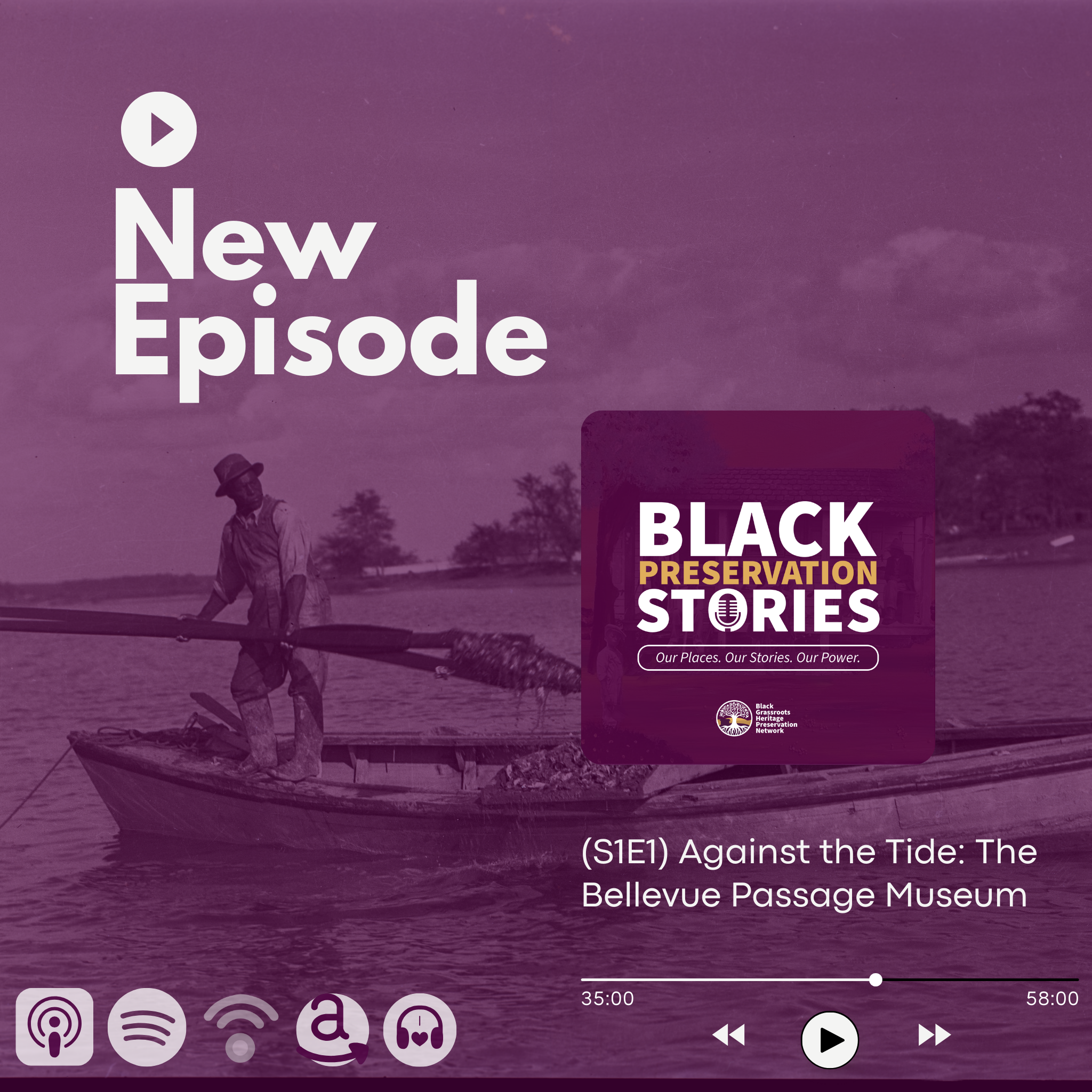
![Podcast cover art showing a person in a boat on a river with trees in the background, overlaid with text promoting a new episode of Black Preservation Stories about the Bellevue Passage Museum, including podcast platform icons.]()
S1 E1 - Against the Tide: The Bellevue Passage Museum
In Bellevue, Maryland—one of the Eastern Shore’s last historically Black maritime communities—plans for fourteen multimillion-dollar waterfront homes threaten historical erasure, the village’s working-class character, and communal bonds. In response, the founders of the Bellevue Passage Museum are racing to safeguard the village’s legacy.
-
![Podcast cover art featuring an exhibition space with mannequins and photographs, with text indicating a new episode of 'Black Preservation Stories' titled '(S1E2) A Promised Land: The Mound Bayou Museum of African-American Culture and History'.]()
S1 E2 - A Promised Land: Mound Bayou Museum of African-American Culture and History
Mound Bayou—founded in 1887 by Isaiah T. Montgomery and Benjamin T. Green as the oldest all-Black municipality in the United States and known as the “Jewel of the Delta”—is home to the Mound Bayou Museum of African-American Culture and History, which honors it’s legacy of self-governance, mutual aid, and resilience—a mission rooted in a spiritual calling passed down through generations.
-
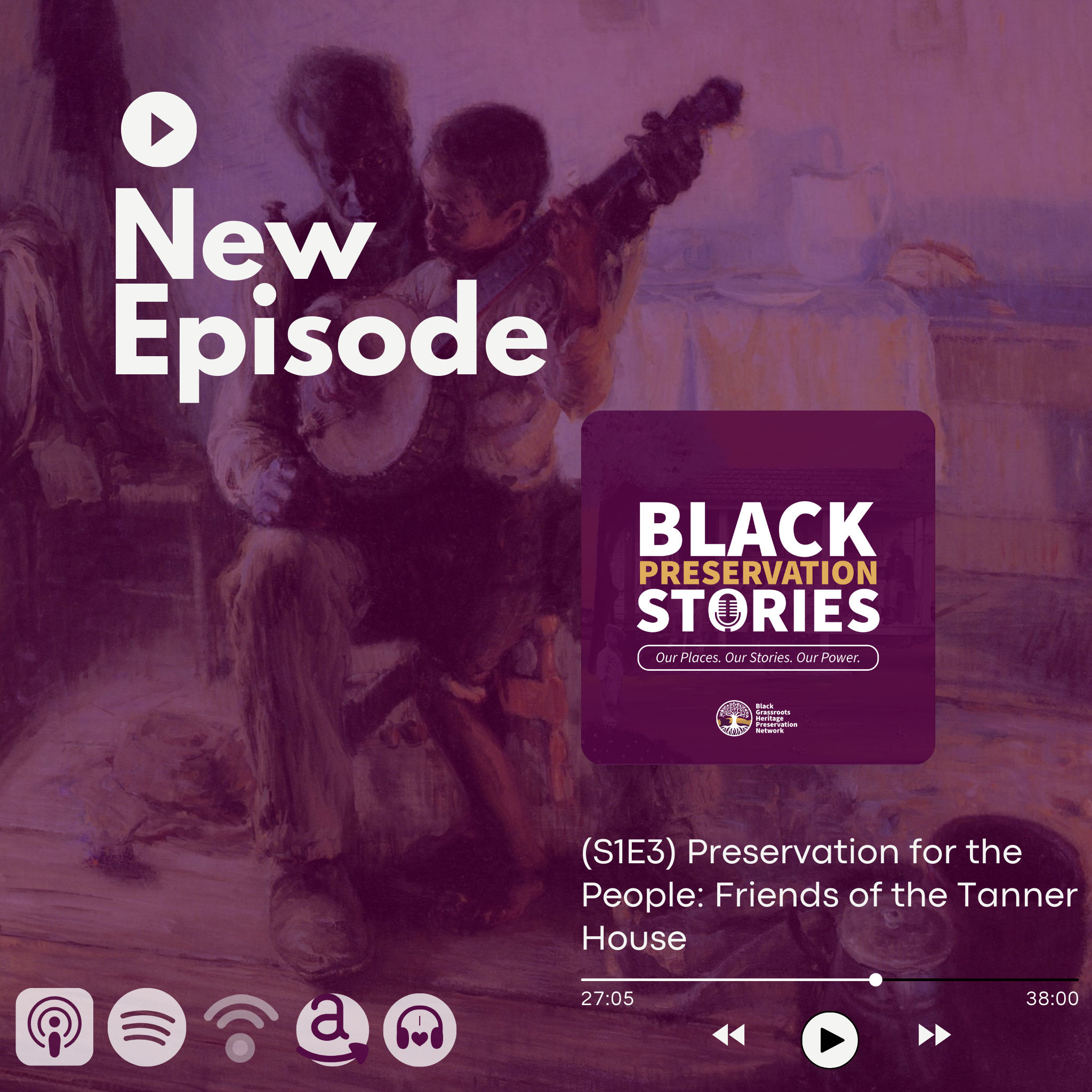
![Podcast promotional artwork for 'Black Preservation Stories' with a painting of a person playing a guitar, sitting on the ground, with others in the background. Text promotes a new episode titled '(S1E3) Preservation for the People: Friends of the Tanner House'.]()
S1 E3 - Preservation for the People: Friends of the Tanner House
Friends of the Tanner House formed in December 2021 to rescue Henry Ossawa Tanner’s childhood home in Philadelphia. In 2023, they launched a community-driven visioning process to transform it into a cultural center tailored to local needs—demonstrating how centering people over policy fosters survival and connection and how preserving a historic home can empower an entire community.
-
![]()
S1 E4 - 12 Million Souls: The Middle Passage Ceremonies and Port Markers Project
The Middle Passage Ceremonies and Port Markers Project was founded in 2011 to honor the memory of the two million Africans who perished during the transatlantic crossing and the ten million who survived, shaping the Americas through the placement of historical markers and public ceremonies of remembrance across the United States.
-
![]()
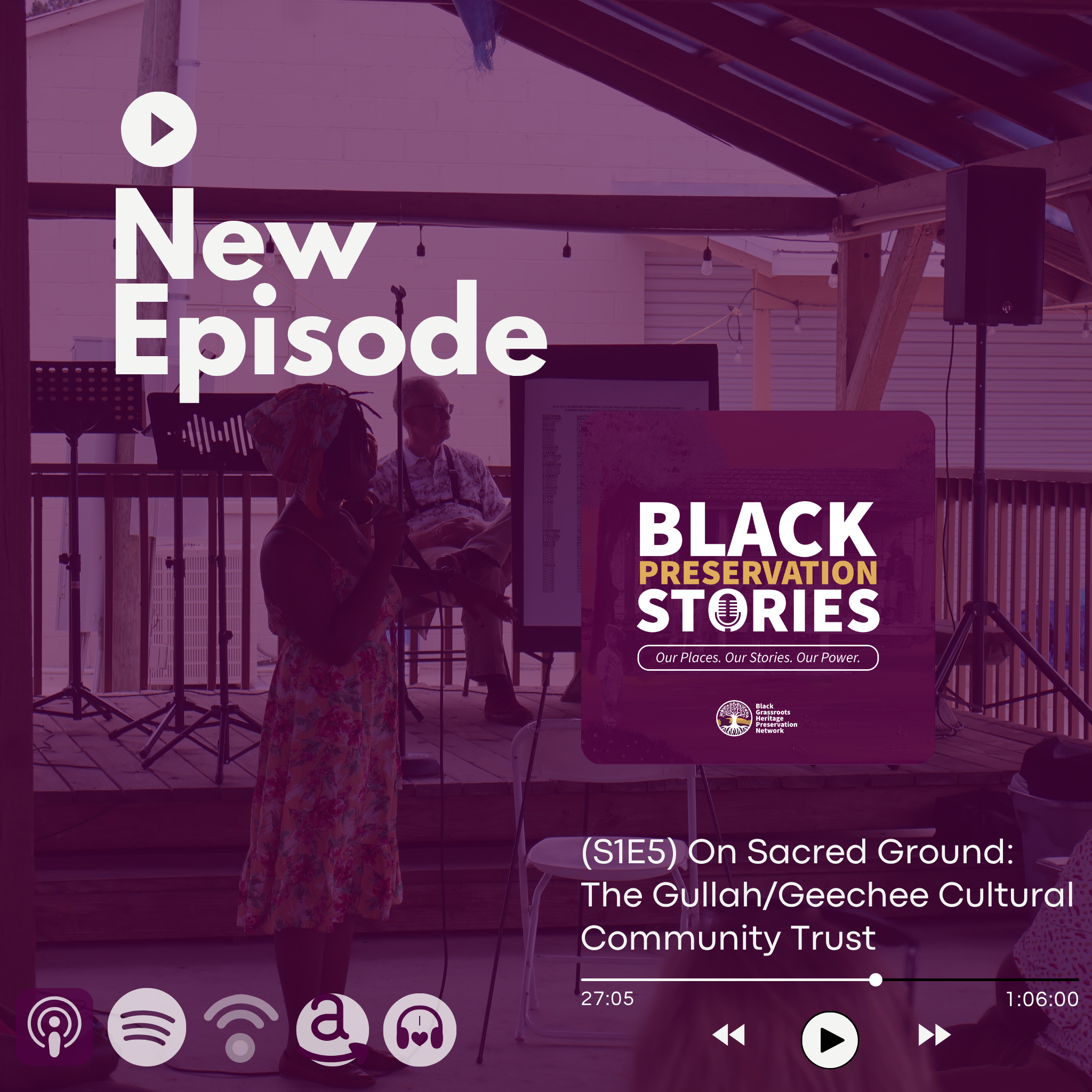
S1 E5 - On Sacred Ground: The Gullah/Geechee Cultural Community Trust
The Gullah/Geechee Cultural Community Trust in Nassau County, Florida engages struggles related to land loss, displacement, and the ongoing fight for self-determination. From zoning battles to protecting ancestral burial grounds, they explore what it truly means to preserve not just Black history—but a living future.
-
![]()
S1 E6 - Freedom Was the Curriculum: 163 Years of the Penn Center
Founded in 1862 as one of the first schools for formerly enslaved people, the Penn Center has long been a cornerstone of Black self-determination on St. Helena Island, South Carolina. Today, it remains a vital force for cultural preservation and land retention in the Gullah/Geechee corridor.
-
![]()
S1 E7 - We Just Wanted to Be Free: The Safe House Black History Museum
In Greensboro, Alabama, stands a house that once shielded Dr. Martin Luther King Jr. from the deadly threats of the Ku Klux Klan two weeks before his assassination in Memphis, Tennessee. Today, the Safe House Black History Museum honors the everyday foot soldiers in the struggle and their sacrifices.
-
![]()
S1 E8 - Trials by Fire: The Scottsboro Boys Museum
In 1931, nine Black teenagers—later known as the Scottsboro Boys—were falsely accused of raping two white women, igniting one of the most infamous legal injustices in U.S. history and a global fight for civil rights. Founded in 2010 by the late Sheila Washington, the Scottsboro Boys Museum preserves their story and her legacy, including her pivotal role in securing their posthumous exoneration through the 2013 Scottsboro Boys Act.
-
![]()
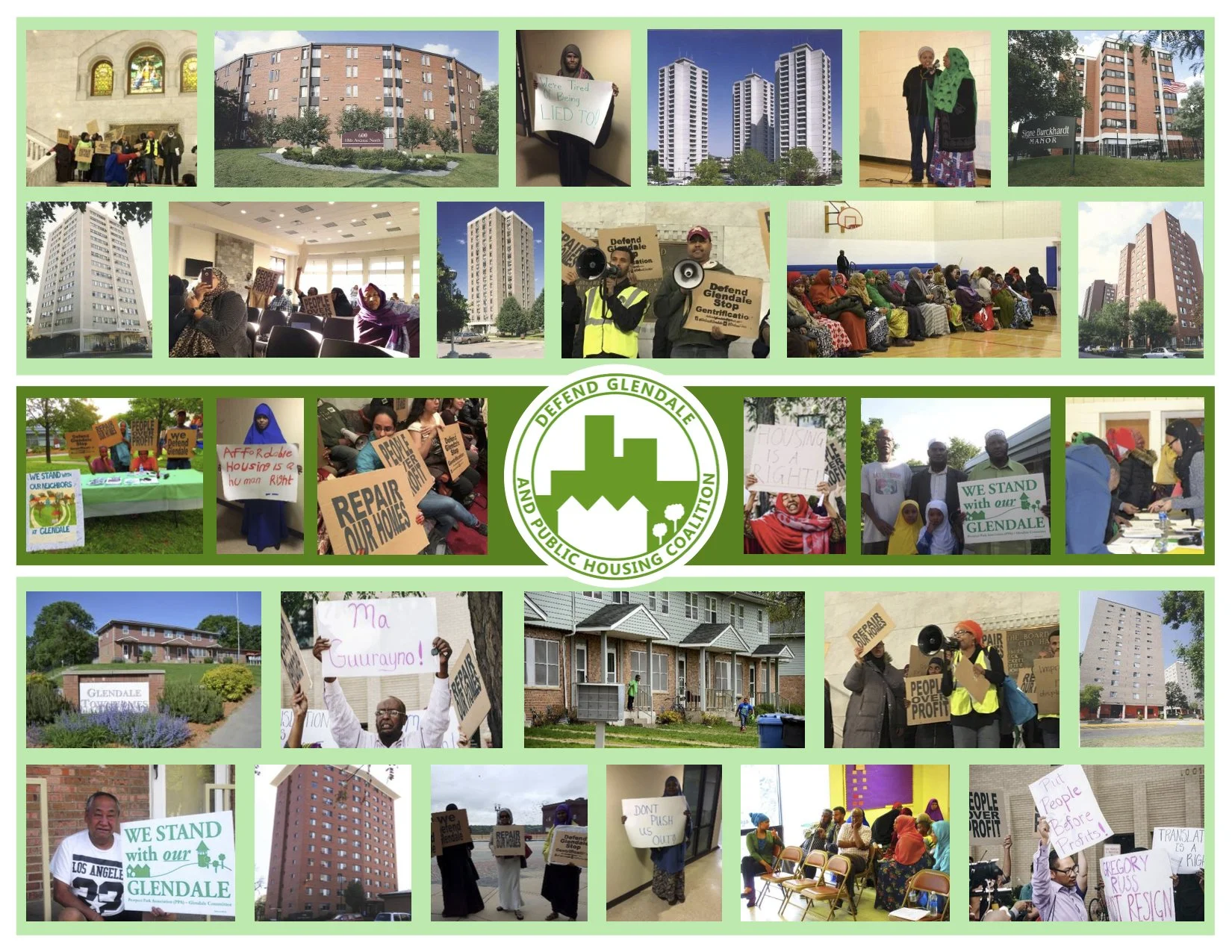
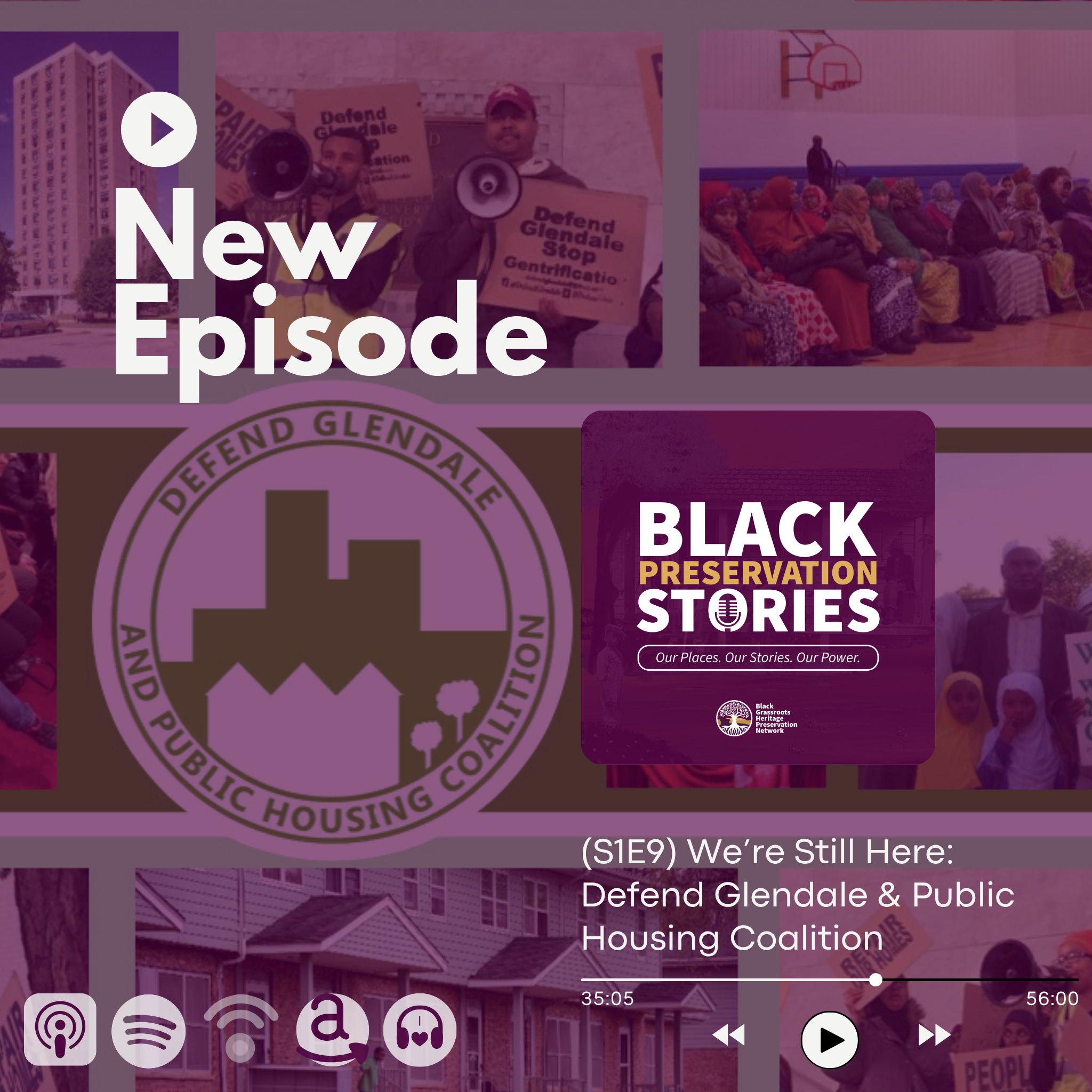
S1 E9 - We’re Still Here: Defend Glendale & Public Housing Coalition
Founded in 2014, the Defend Glendale and Public Housing Coalition emerged when residents of Glendale Townhomes—a 1952 public housing community home to Black Americans, East African and Hmong immigrants, and working families—fought plans for privatization and demolition, transforming a threat of displacement into a lasting movement for housing, memory, and justice.
-
![]()
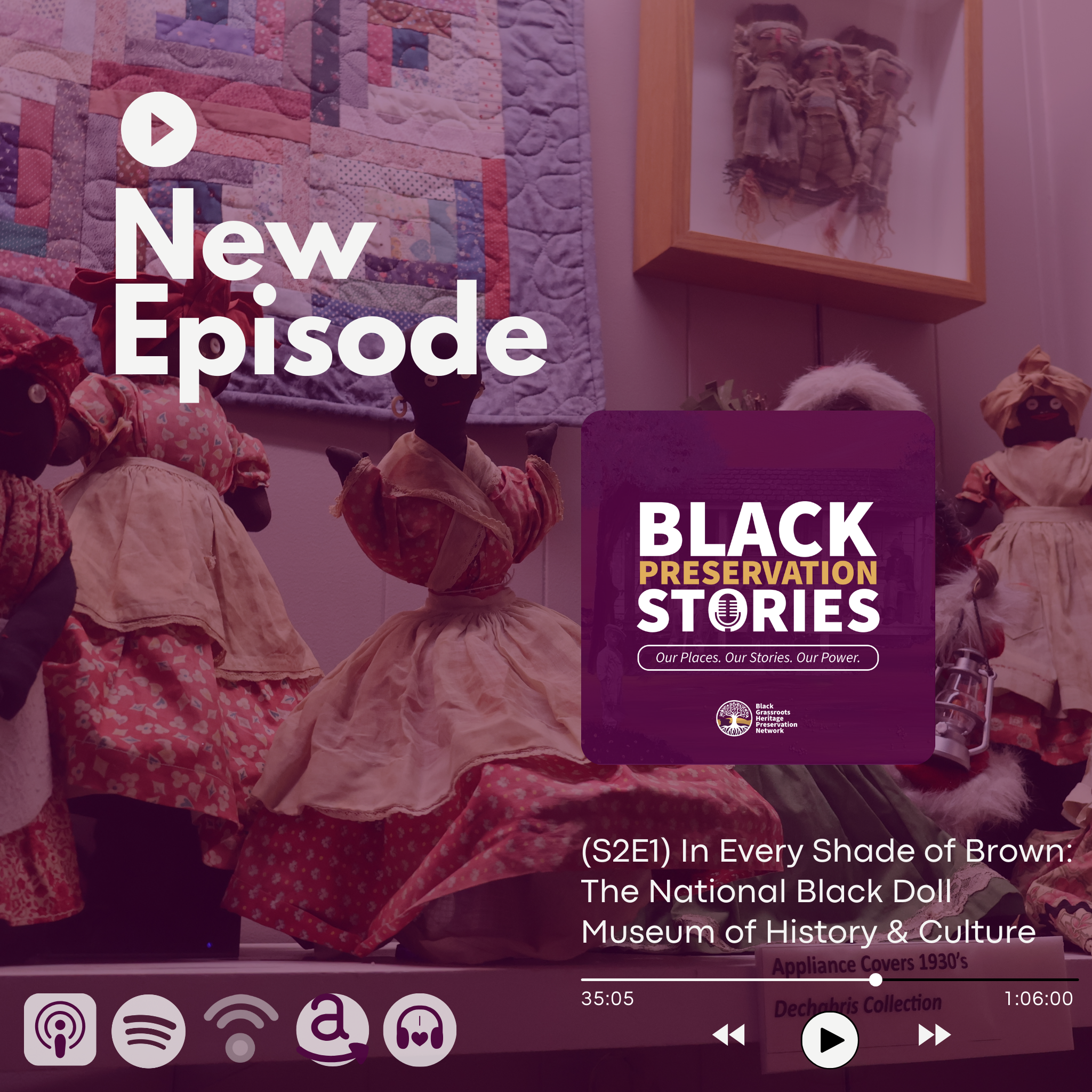
S2 E1 - In Every Shade of Brown: National Black Doll Museum of History and Culture
In Attleboro, Massachusetts, sisters Debra Britt, Felicia Walker, and Tamara Mattinson founded the National Black Doll Museum of History & Culture in 2012. What began as a family collecting practice gradually expanded into a museum housing more than 10,000 Black dolls. The collection centers on representation, youth self-esteem, and culturally grounded education rooted in Black history.
-
![]()
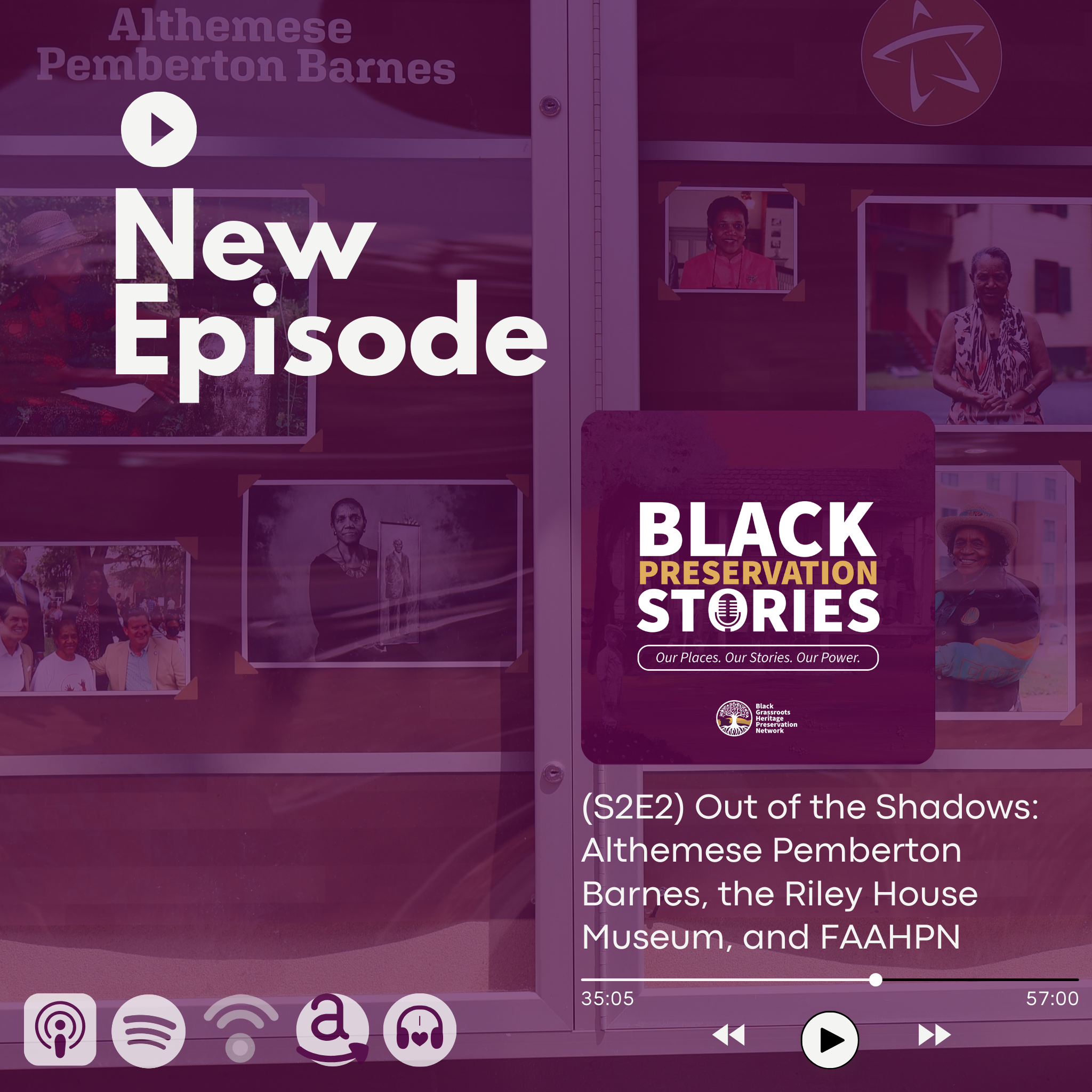
S2 E2 - Out of the Shadows: Althemese Barnes, the Riley House Museum, and FAAHPN
In Tallahassee, Florida, preservationist Althemese Pemberton Barnes helped reshape how the city remembers its African American past. In 1987, she led the restoration of Greenwood Cemetery, the city’s historic African American burial ground. She later helped establish the John G. Riley Center & Museum in 1996 and co-founded the Florida African American Heritage Preservation Network in 1997, connecting Black museums and heritage sites across the state. Altahmese Pemberton Barnes reflects on her journey and the work required to sustain grassroots preservation across generations.
-
![]()
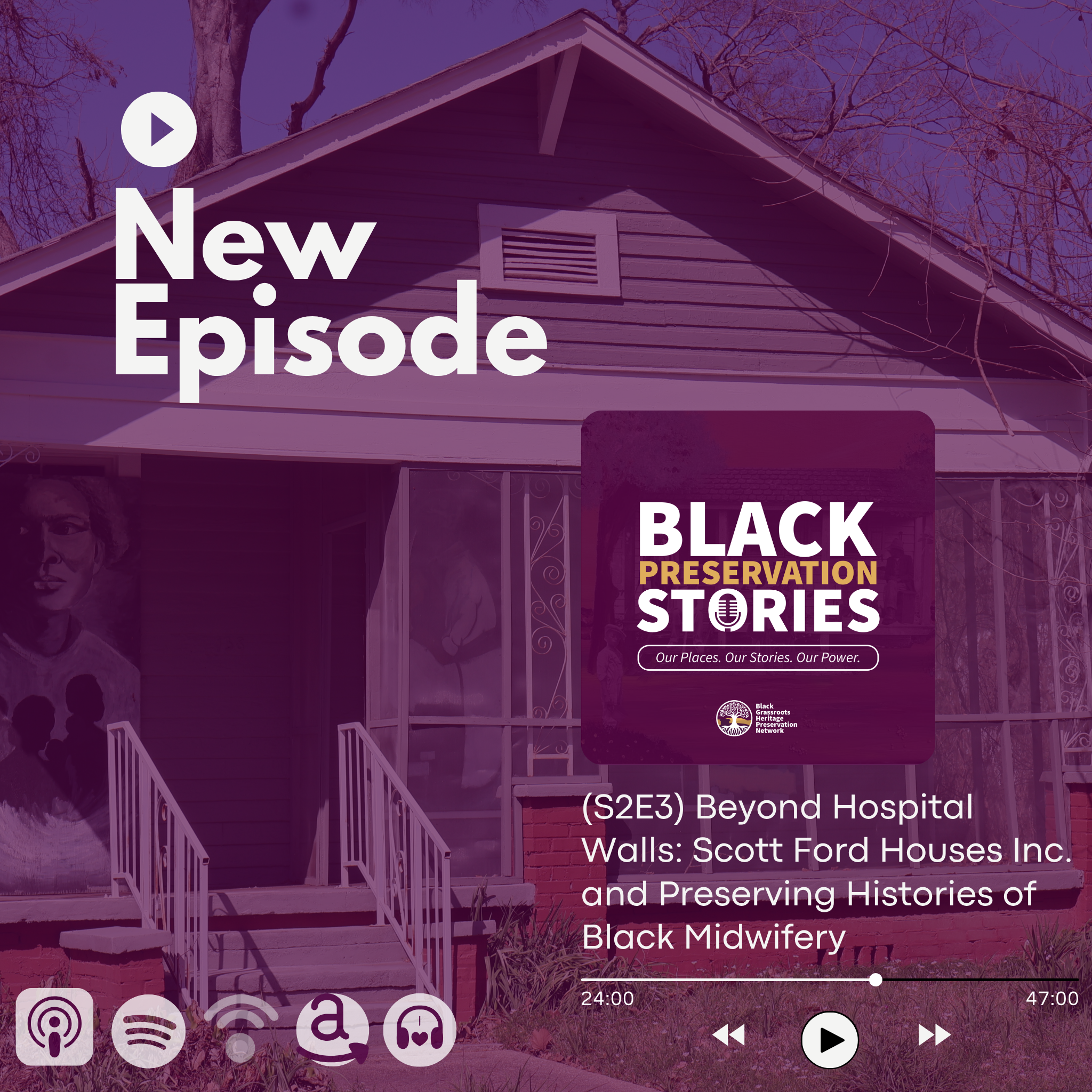
S2 E3 - Beyond Hospital Walls: Scott Ford Houses Inc. and Preserving Histories of Black Midwifery
In Jackson, Mississippi, Scott Ford Houses, Inc. centers its work on preserving the history and legacy of Black midwifery. Founded in 1995, the organization stewards two 1890s homes in the Farish Street Historic District—built by formerly enslaved Mary Greene Scott and later home to midwife Virginia Ford—one of the state’s few surviving sites tied to this tradition. Through initiatives like Wombs of Wisdom and the Granny Midwives Oral History Project with Jackson State University’s Margaret Walker Center, it documents and sustains the knowledge, practices, and community networks that defined midwifery across Mississippi.
-
![]()
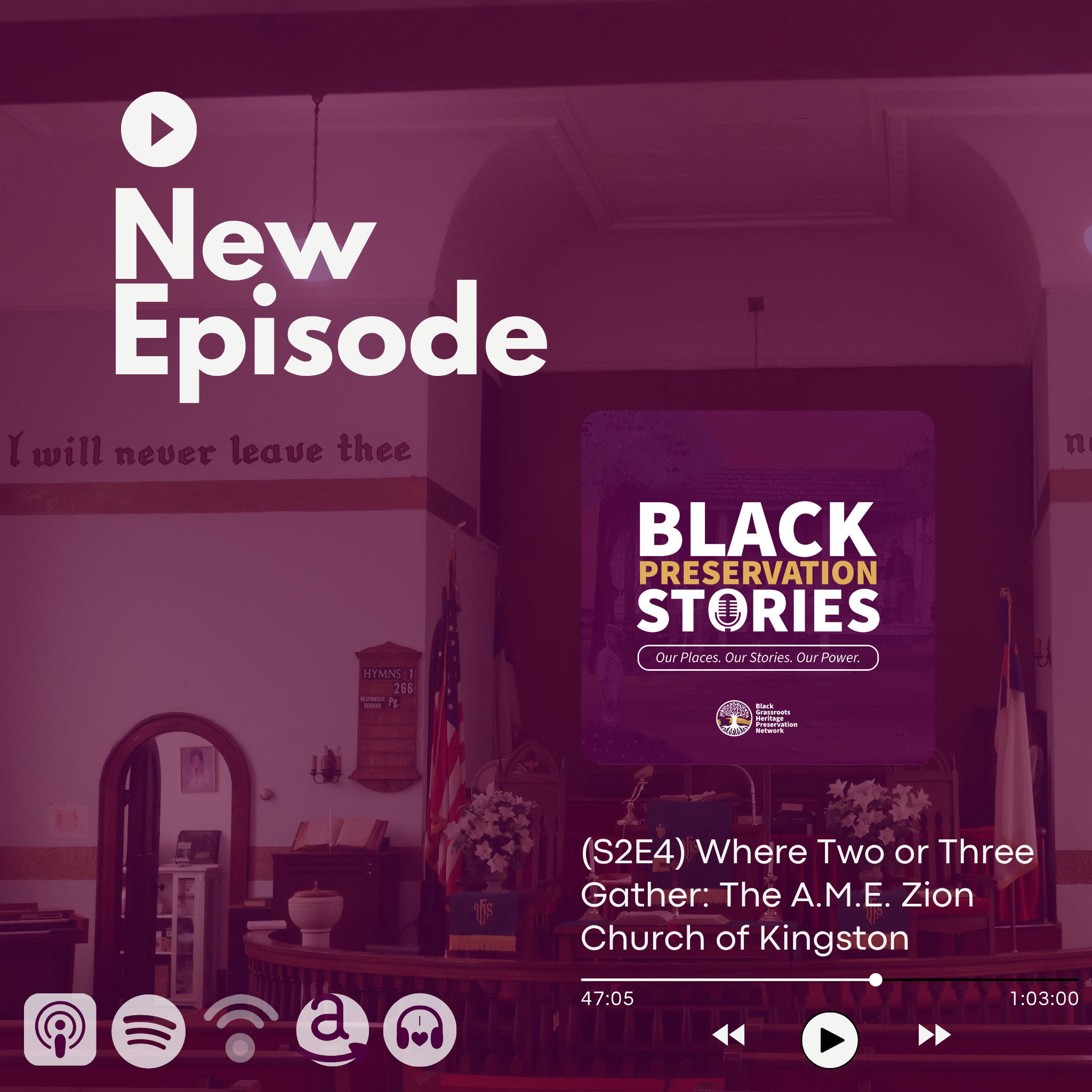
S2 E4 - Where Two or Three Gather: The A.M.E. Zion Church of Kingston
In Kingston, New York, the A.M.E. Zion Church of Kingston—founded in 1848 and the oldest continuously active African American congregation in Ulster County—centers its work on faith, preservation, and community continuity. Established in resistance to racial exclusion within white Methodist congregations, the A.M.E. Zion Church, known as the Freedom Church, has long been a site of Black self-determination and leadership, including a historic commitment to the ordination of Black women. Today, congregants steward the church as both a spiritual and historical space, advancing efforts in restoration, accessibility, and documentation.
-
![]()
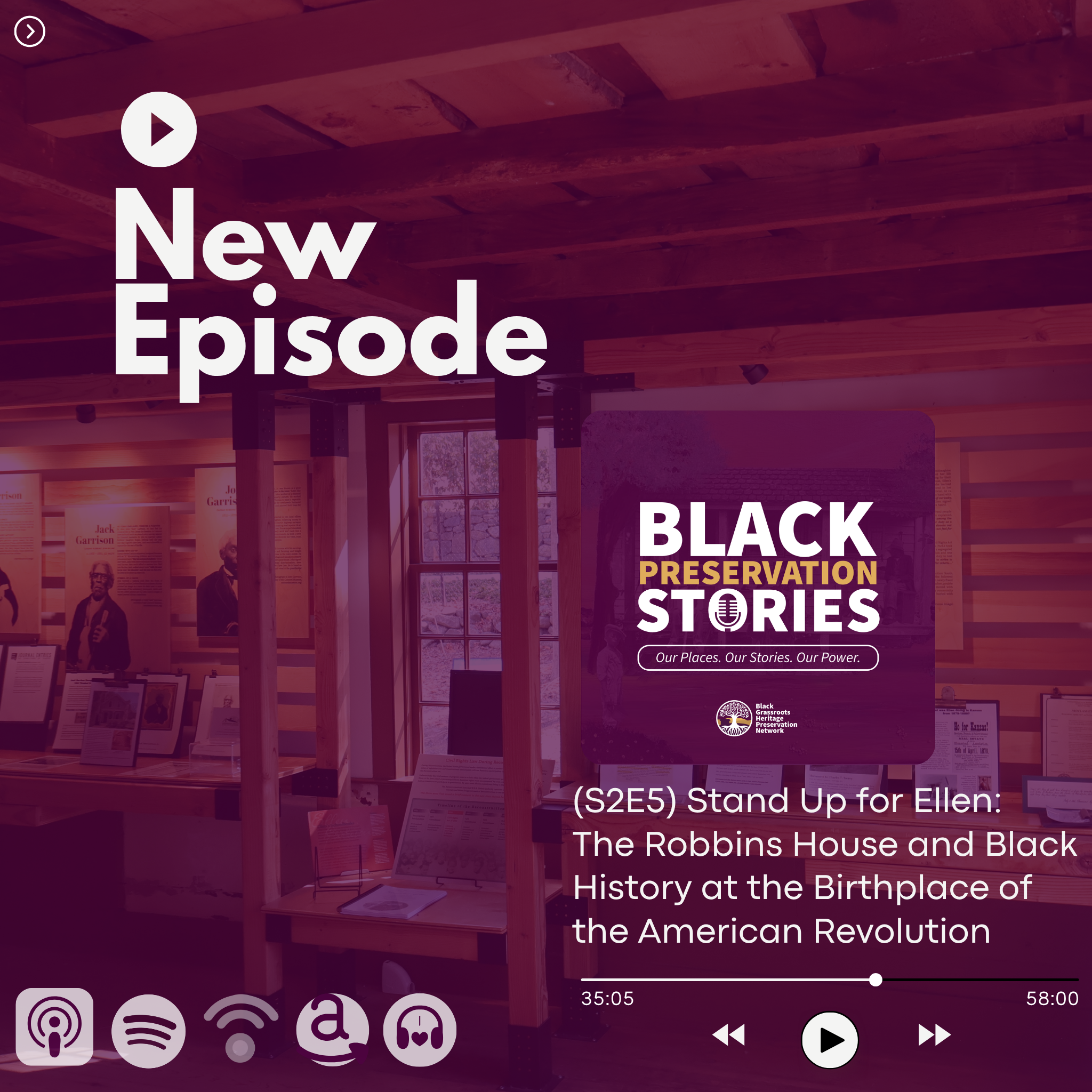
S2 E5 - Stand Up for Ellen: The Robbins House and Black History at the Birthplace of the American Revolution
In Concord, Massachusetts, the Robbins House centers its work on expanding the story of the American Revolution through the lives of Black residents. Built around 1800 for the family of Caesar Robbins—a formerly enslaved man who gained his freedom through military service—the house is one of the few surviving structures in New England tied to a Black Revolutionary War veteran. Preserved through grassroots efforts in the early 2000s, the site now interprets generations of free Black life marked by landownership, education, and activism and engages ongoing conversations about race, memory, and the meaning of American freedom as the nation approaches its 250th anniversary.
-
![]()
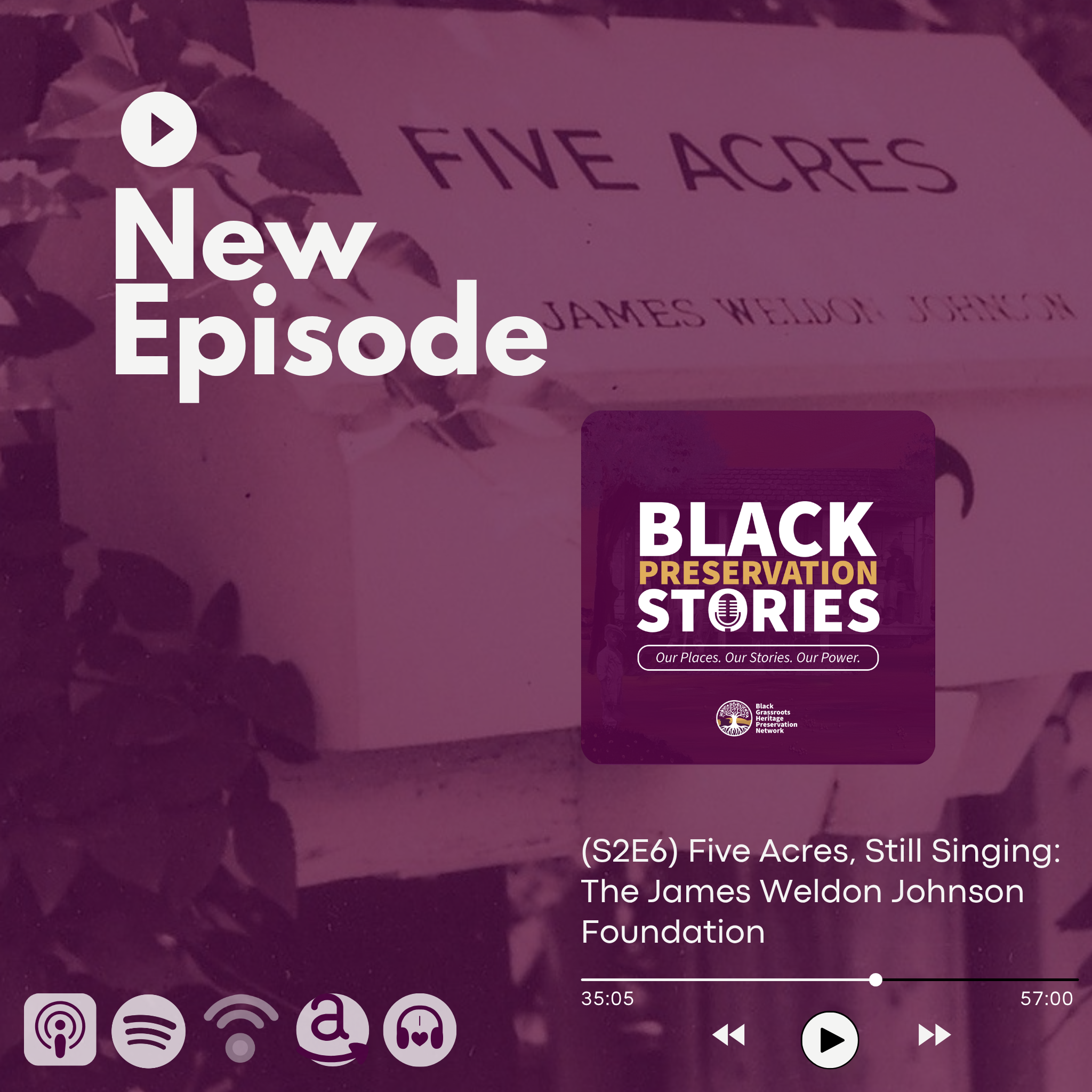
S2 E6 - Five Acres, Still Singing: The James Weldon Johnson Foundation
In Great Barrington, Massachusetts, Five Acres—the home and writing cabin of poet, diplomat, and NAACP leader James Weldon Johnson—served as a retreat from the demands of public life. Purchased in 1926, the property became a space for writing, rest, and creative renewal, where Johnson continued the work that made his “National Hymn,” later known as “Lift Every Voice and Sing” and recognized today as the Black National Anthem, one of the most enduring works in African American cultural history. After the property fell into disrepair and faced possible demolition, literary executor Jill Rosenberg-Jones and her husband Rufus Elmer Jones Jr. acquired and restored the site, transforming it into a growing center for preserving Johnson’s life, work, and artistic vision through the James Weldon Johnson Foundation.



Listen & Subscribe



Dive Deeper
News & Stories